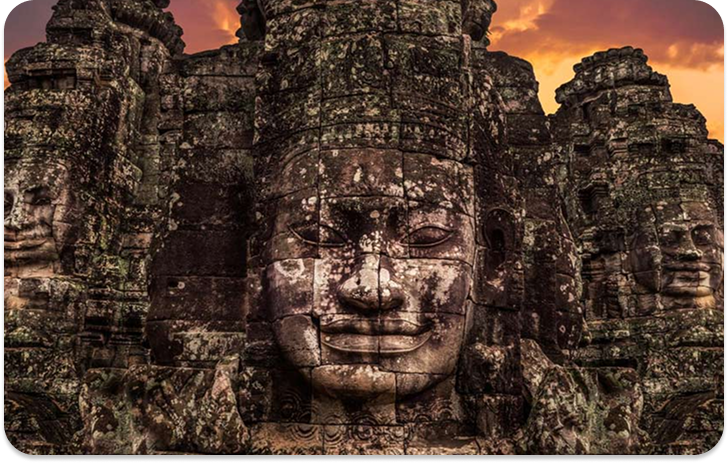
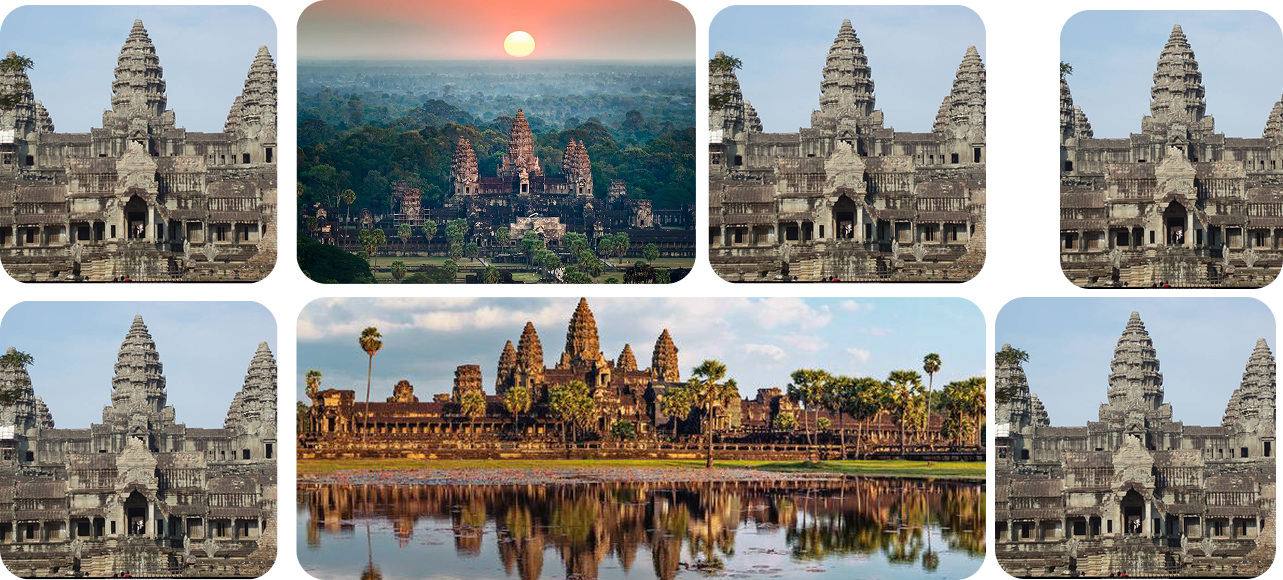
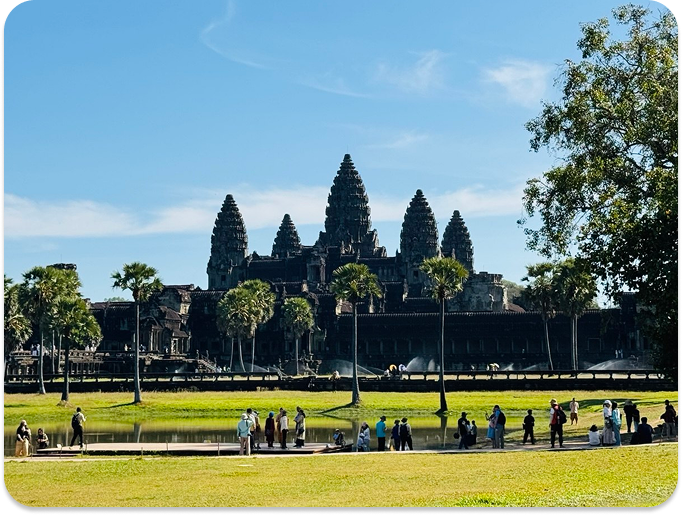
Angkor Wat Temple
Angkor Wat is the world’s largest religious monument and a symbol of Cambodia, featured on its national flag. Built between 1113–1150 CE by King Suryavarman II, it was originally a Hindu temple and later became a Theravada Buddhist site, remaining an active place of worship for centuries.
The temple is admired for its grand scale, detailed carvings, and harmonious design, symbolizing Mount Meru in Hindu-Buddhist cosmology. Its layout includes a wide moat, outer walls, and five central towers.
Designated a UNESCO World Heritage Site in 1992, Angkor Wat attracts over 2.5 million visitors annually. Restoration efforts since the 20th century have involved international organizations under UNESCO, including France, Japan, India, Germany, the U.S., South Korea, China, and Italy.